
Export Knowledge Center
Product Guides & Market Insights
Technical specifications, quality checklists, export documentation, and sourcing strategies for dehydrated onion & garlic buyers.
 Origin & Process
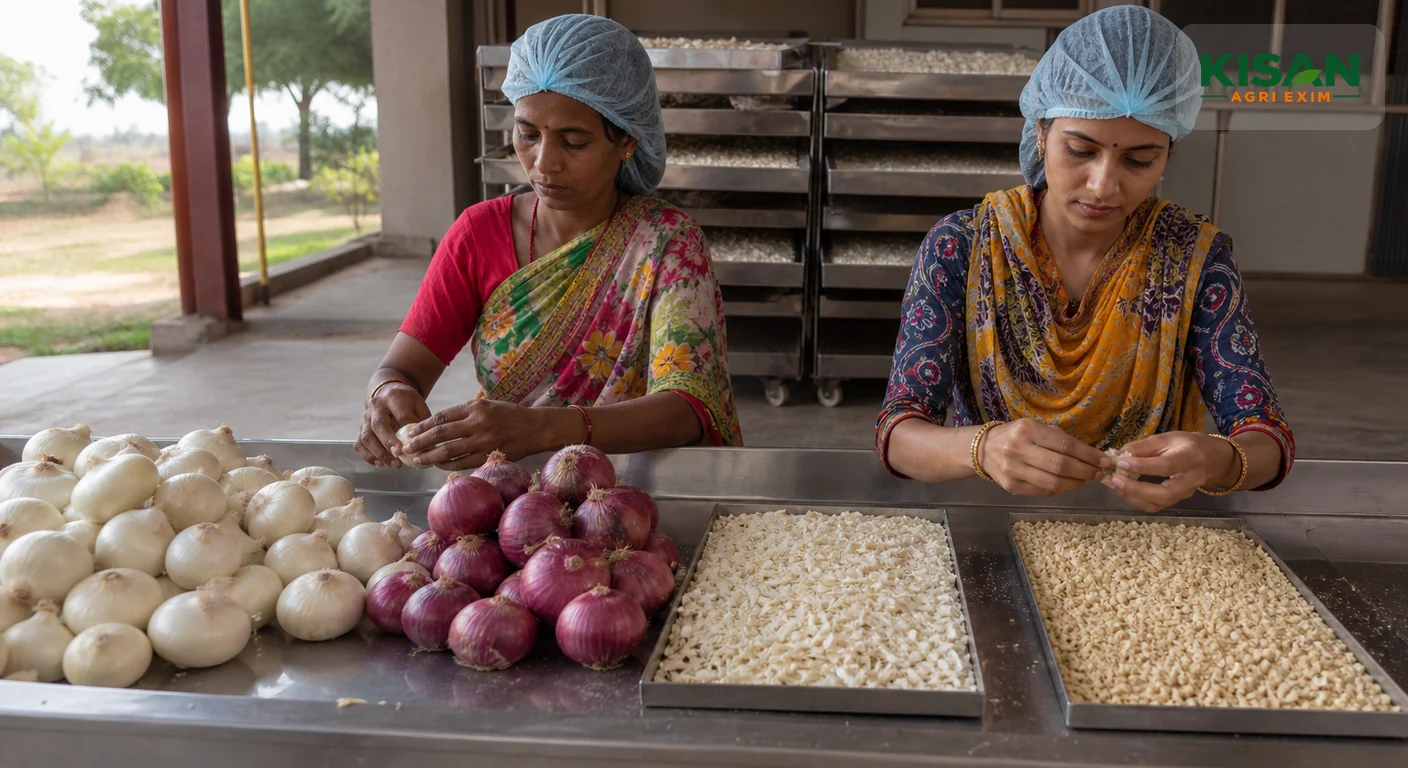
Indian Onion Varieties for Dehydration
White onion cultivars are generally suited to dehydration where pale color and high solids are priorities, while red cultivars can produce darker dried pieces. In a 2022 Indian study, Bhima Shubhra and Bhima Dark Red recorded the highest dehydration ratio at 7.14:1; Bhima Kiran recorded 6.25:1.
Read Full Guide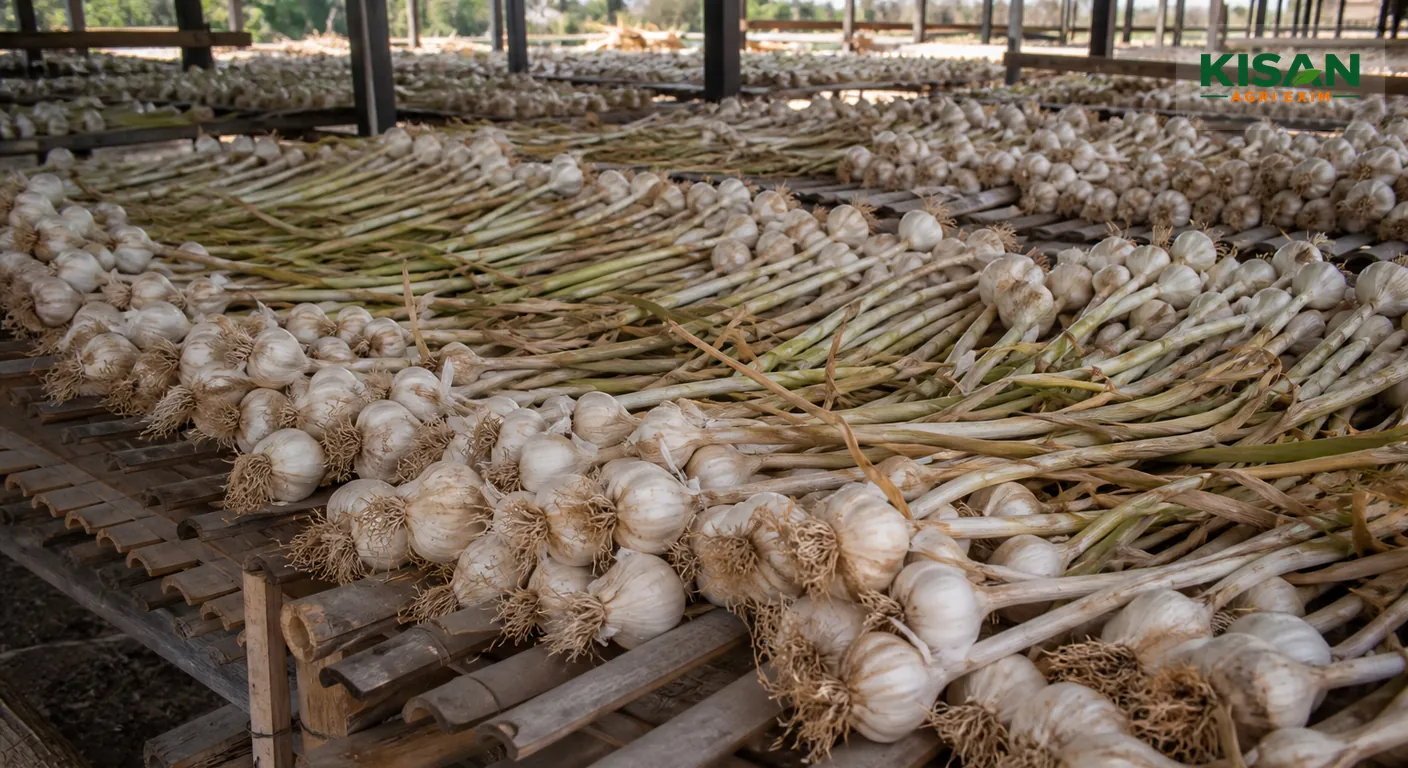 Origin & Process
India Garlic Crop Cycle and Timing
Indian garlic is mainly a Rabi crop, sown from late September to November and harvested from February to April. Peak arrivals from late February through May support the main processing season, while storage losses and lower off-season availability can push raw garlic and dehydrated product prices higher.
Read Full Guide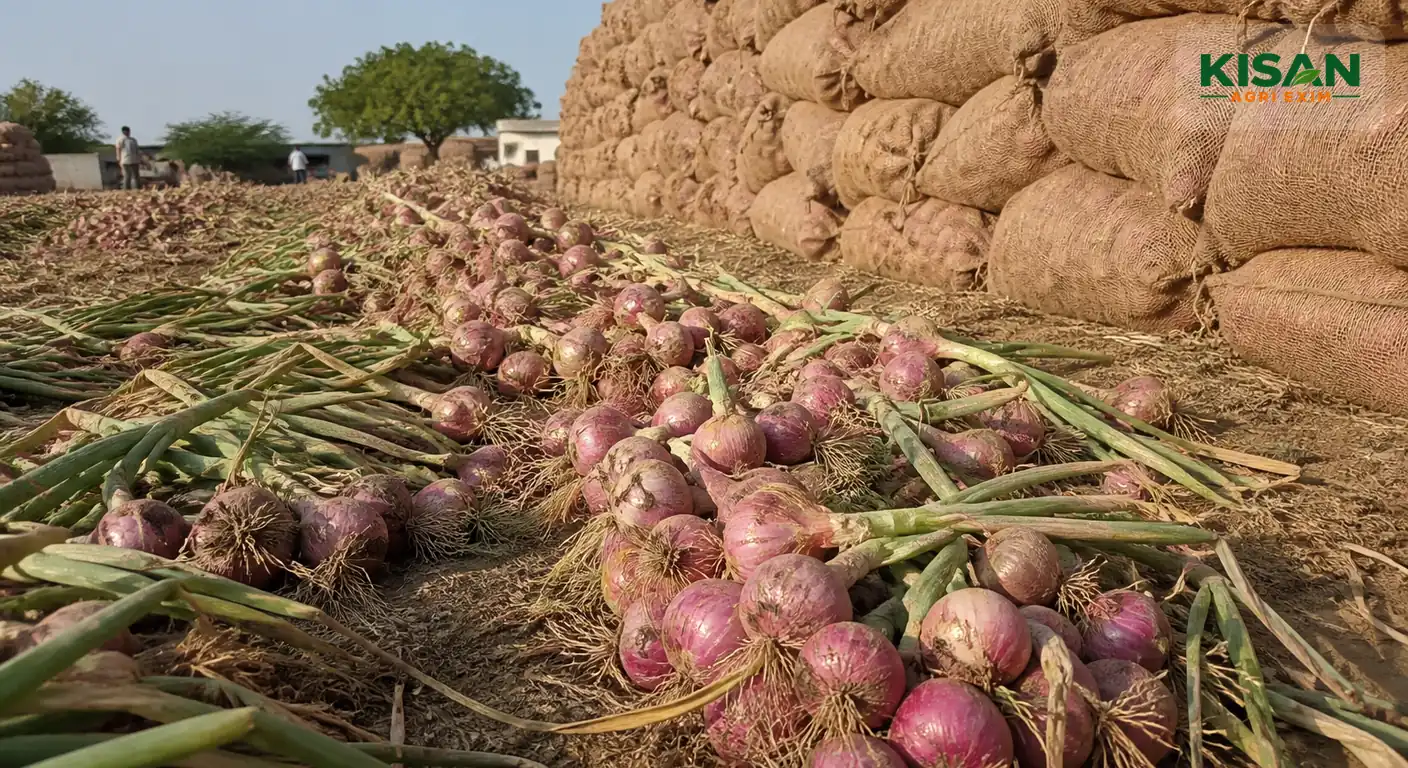 Origin & Process
India Onion Crop Cycle: Seasons & Harvest
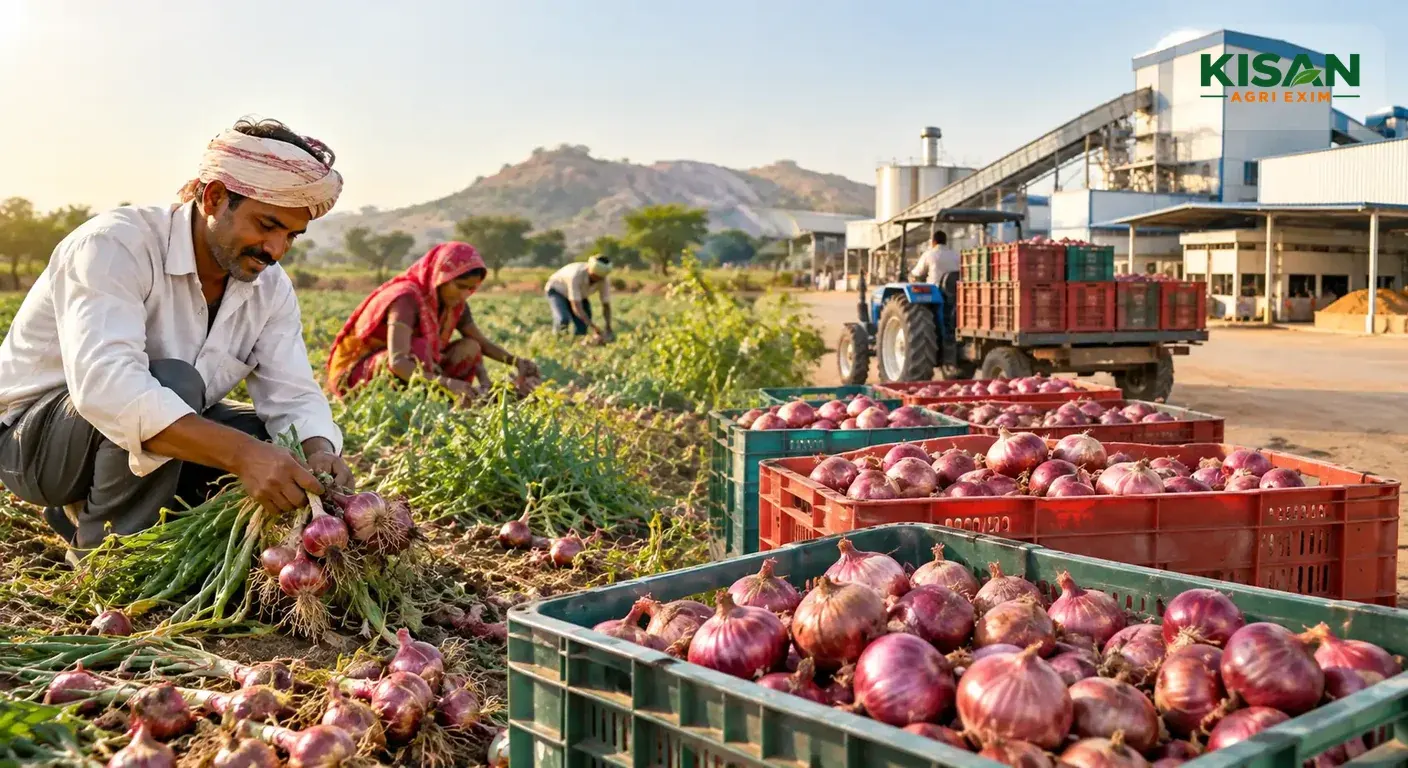
India grows onion in kharif, late kharif and rabi cycles, with planting and harvest windows spread across the year. Rabi accounts for 60–65% of annual production and its March–May harvest is the main period for storage and industrial procurement.
Read Full Guide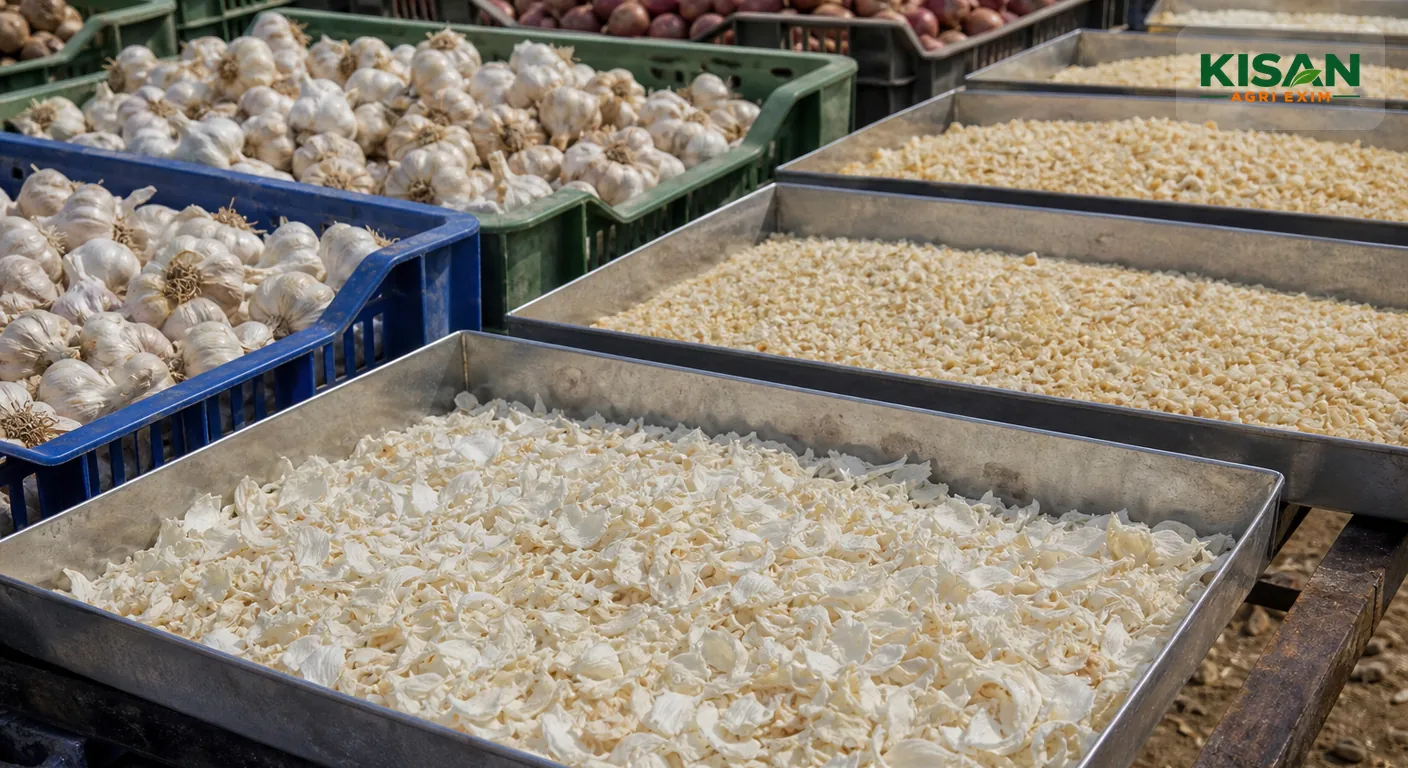 Origin & Process
Sustainable Dehydrated Onion and Garlic
Dehydration can extend the usable life of onions and garlic while creating an outlet for seasonal surplus and bulbs rejected by fresh markets. Its sustainability impact depends on drying energy, water use, packaging choices, and whether procurement arrangements pass processing demand and value back to growers.
Read Full Guide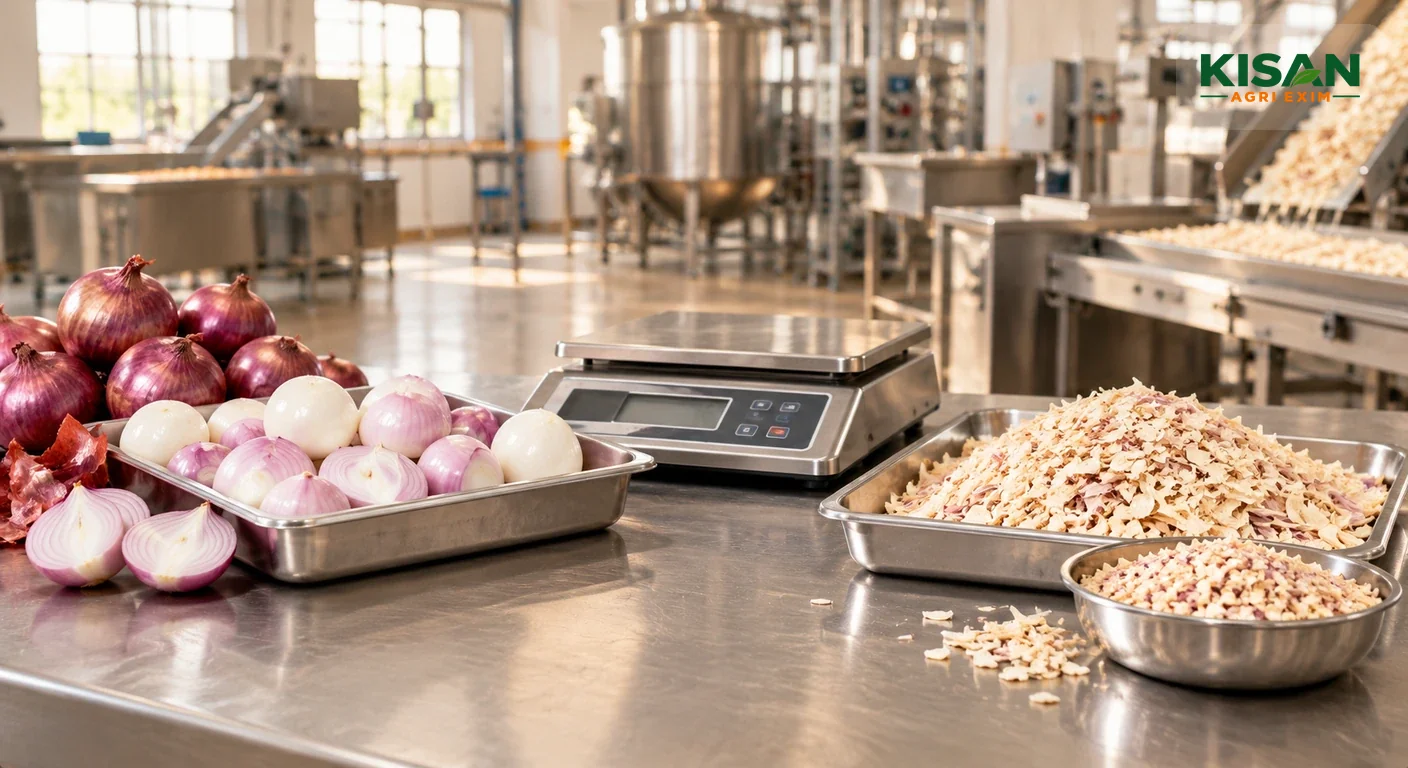 Buyer Guides
Cost-in-Use: Dehydrated vs Fresh
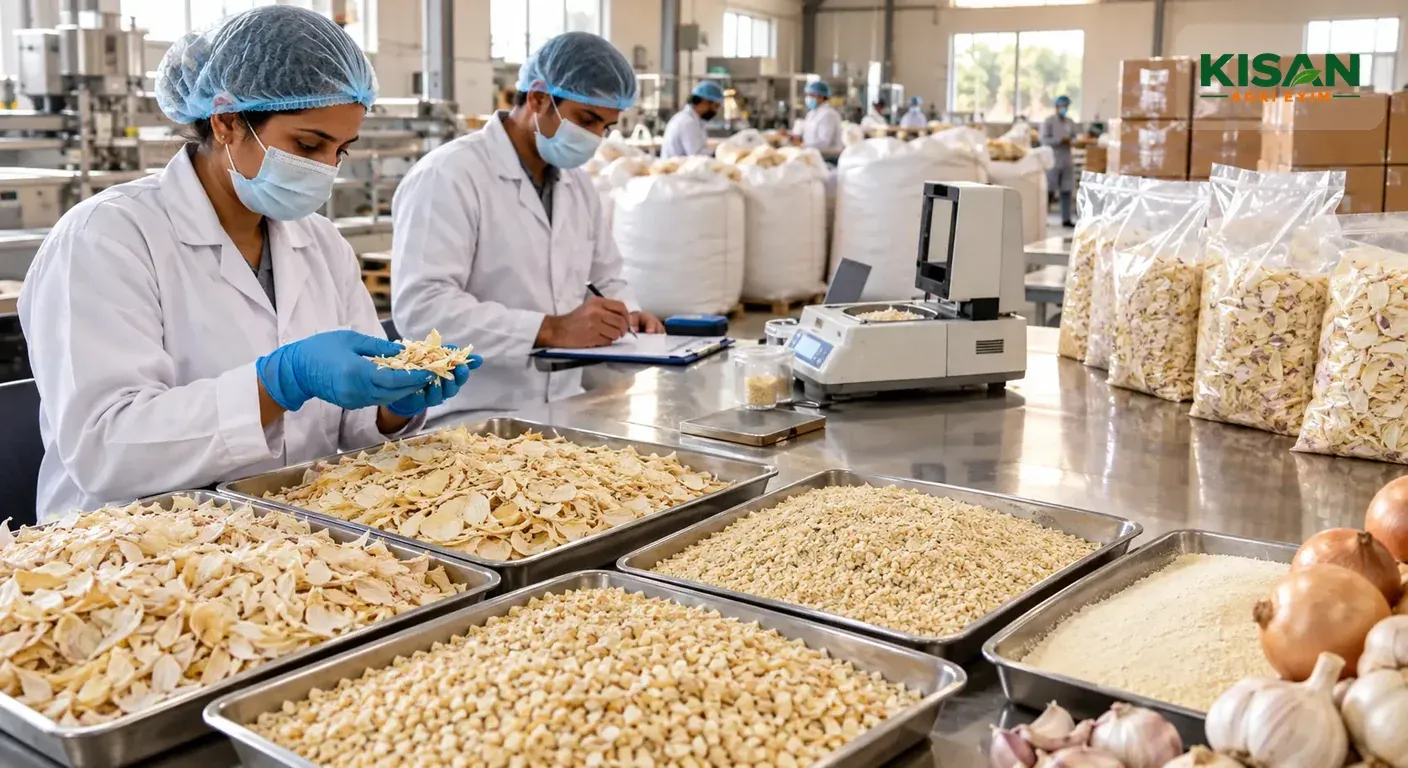
Cost-in-use compares the usable ingredient cost in a finished recipe rather than the supplier price per kg. For dehydrated onion and garlic, the calculation should include conversion yield, trim waste, labor, storage, freight, processing energy, and expected losses.
Read Full Guide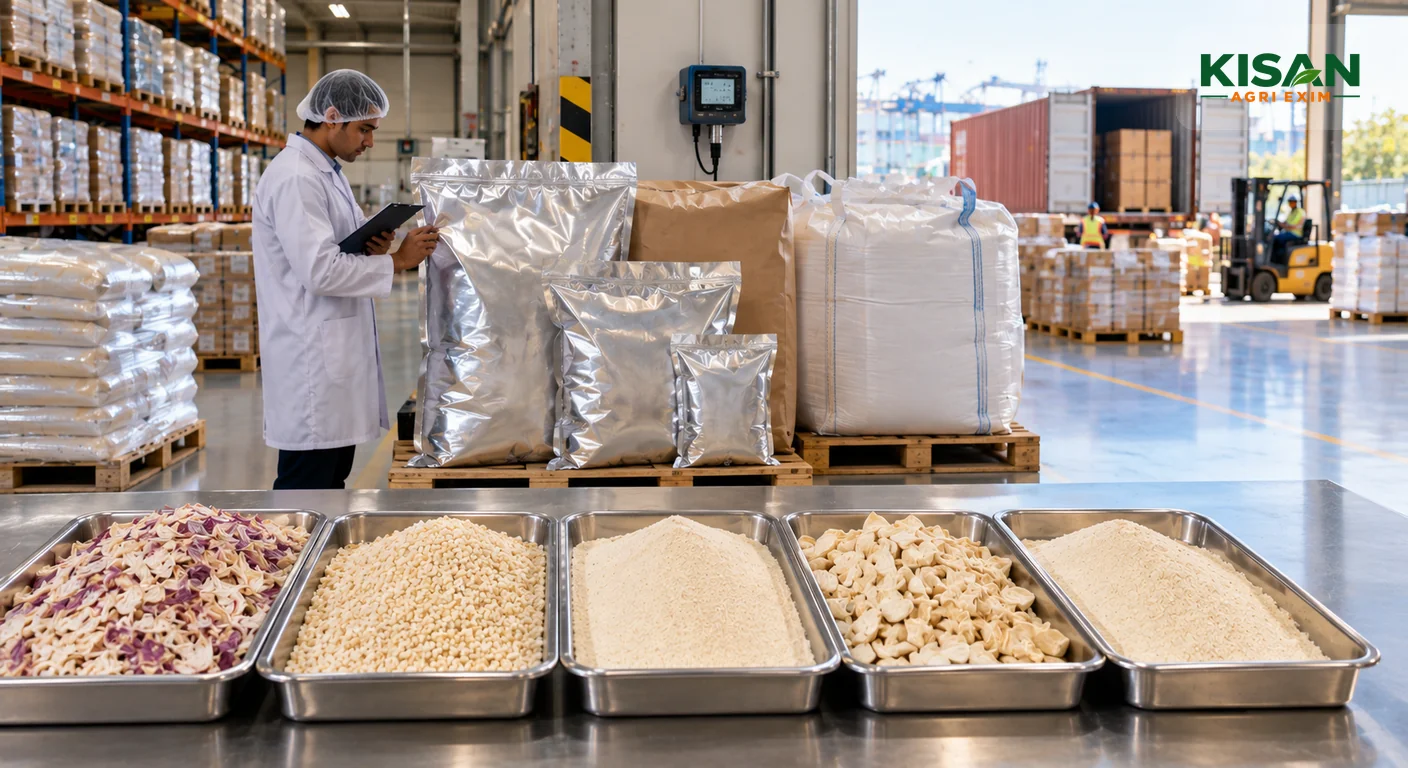 Quality & Compliance
Dehydrated Onion & Garlic Shelf Life
Dehydrated onion and garlic can typically maintain quality for around 12–24 months when produced to specification and stored in suitable moisture-barrier packaging under cool, dry conditions. Moisture pickup, high humidity, heat, oxygen exposure and poor packaging can shorten practical shelf life.
Read Full Guide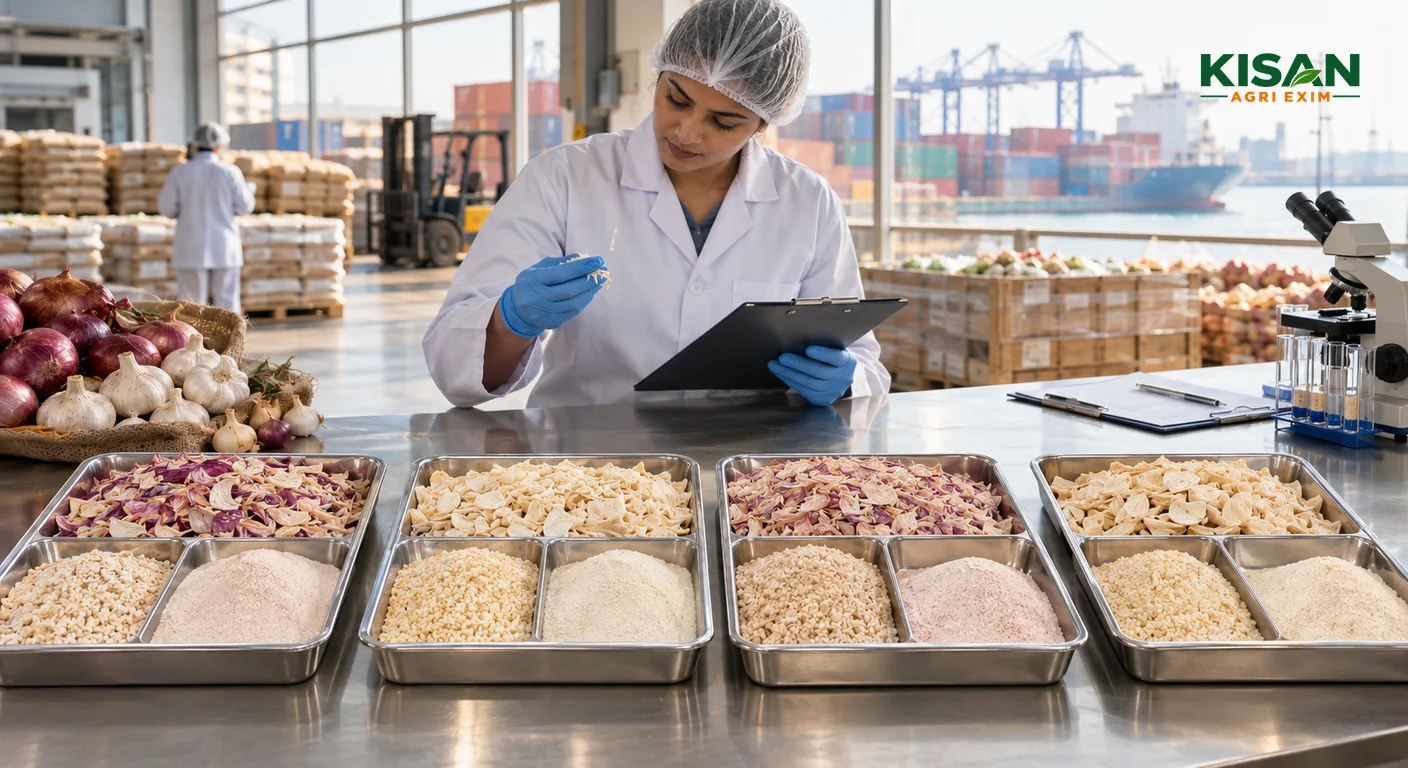

Need specific technical data?
Download product spec sheets, COA samples, or request a custom quotation.
Our export team responds within 24 hours with specifications, pricing, and documentation for your market.