

India Onion Crop Cycle: Seasons & Harvest
Key Takeaway
India grows onion in kharif, late kharif and rabi cycles, with planting and harvest windows spread across the year. Rabi accounts for 60–65% of annual production and its March–May harvest is the main period for storage and industrial procurement.
How India’s Onion Crop Cycle Shapes Supply
India’s onion crop cycle has three main windows: kharif, transplanted from July to August and harvested from October to December; late kharif, transplanted from September to October and harvested from January to March; and rabi, sown in nurseries around October to November, transplanted from December to January and harvested from March to May. Rabi is the dominant cycle, accounting for 60–65% of India’s annual onion production and supplying much of the crop stored for the lean monsoon months.
Production is concentrated in a handful of states: the ten largest onion-producing states accounted for approximately 95% of national production in 2021–22, and Maharashtra alone contributed 43.31% (ICAR-DOGR presentation, citing Horticulture Statistics at a Glance 2022). This concentration means weather and harvest timing in major producing regions can influence arrivals, prices and export availability across the market.
For procurement teams, the crop calendar is more than an agricultural reference. It indicates when fresh-market volumes rise, when storage stocks become important and when industrial buyers are likely to encounter stronger competition for suitable raw material. Rabi onions, harvested under drier conditions, are especially important for storage and processing.
Major Onion-Growing States and Crop Seasons
Maharashtra is India’s leading onion-producing state. Gujarat is another important western production hub, particularly for white onion cultivation and dehydration processing. Other major growing states include Karnataka, Andhra Pradesh, Tamil Nadu, Madhya Pradesh, Rajasthan, Bihar and Uttar Pradesh. Together, the ten leading states represented approximately 95% of India’s onion production in 2021–22.
India’s onion area is distributed across three cycles. Rabi accounts for about 60% of cultivation area, while kharif and late kharif each account for about 20%. The rabi harvest also supplies the largest share of annual production: an estimated 60–65%.
| Crop cycle | Typical transplanting window | Typical harvest window | Market role |
|---|---|---|---|
| Kharif | July–August | October–December | Adds post-monsoon supply |
| Late kharif | September–October | January–March | Bridges the gap before the main rabi harvest |
| Rabi | December–January | March–May | Main harvest for storage and industrial procurement |
The table shows when seedlings are transplanted to the field, not when seed is sown. Onion seed is first raised in a nursery for several weeks; for the rabi crop, nursery sowing generally falls in October–November ahead of December–January transplanting. These are broad seasonal windows, not fixed dates for every state. Regional weather and crop conditions affect when onions reach markets. Early kharif arrivals from southern growing areas can provide supply before western and northern crops arrive in volume.
What Harvest Timing Means for Buyers
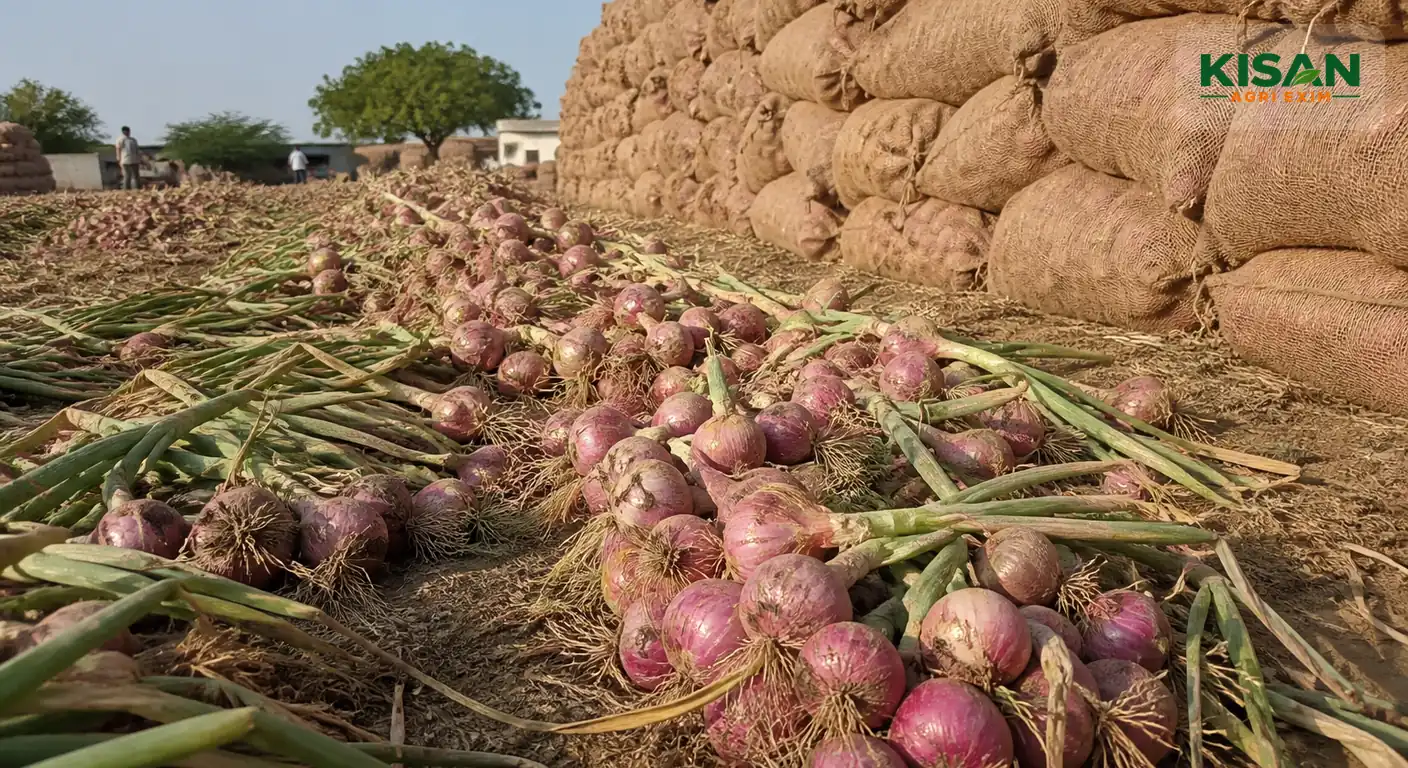
The arrival of the rabi crop from March to May brings the year’s main supply increase. Larger market volumes during and after this harvest create the principal procurement window for processors and fresh-market exporters. The portion of the crop that can be stored also supports availability in the months that follow.
Kharif and late kharif crops help replenish supply between rabi harvests, but the transition between seasons can be commercially sensitive. As stored stocks decline ahead of the next substantial arrivals, tighter availability can place upward pressure on prices. Rain around harvest can also delay field operations or damage bulbs, adding volatility to market arrivals.
Crop type matters to processors as well as timing. Rabi onions mature under drier conditions and are better suited to prolonged storage than the more moisture-prone kharif crop. For dehydration, dry matter and soluble solids affect processing yield; high-solid white onions are particularly relevant to industrial production. Buyers planning annual requirements should therefore consider both the harvest window and the intended raw-material use, rather than relying on calendar dates alone.
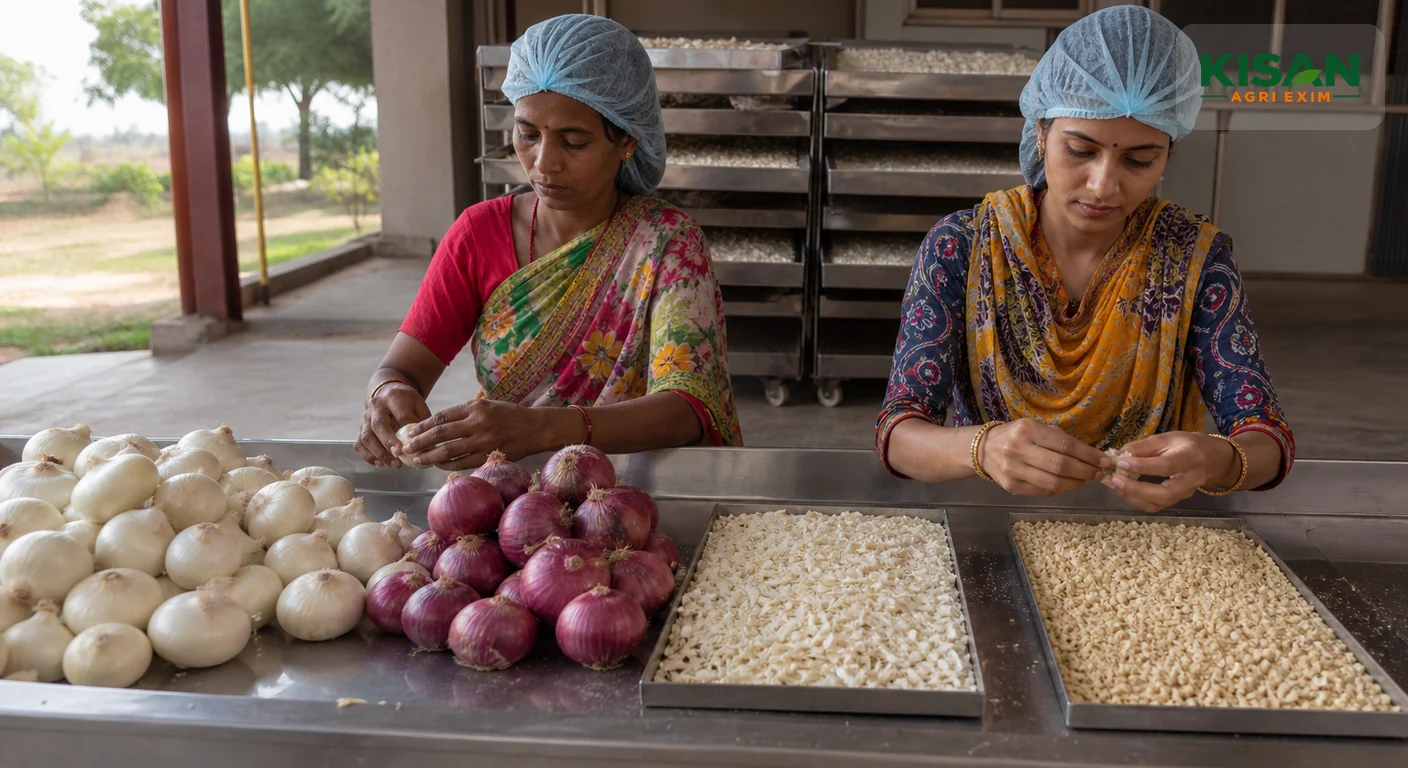
The processing sector is also geographically concentrated. According to an ICAR-DOGR presentation, around 90% of India’s medium-scale onion dehydration industries are located in Gujarat’s Bhavnagar district, alongside 130 processing plants and 85 cold storages. This regional concentration links crop availability in Gujarat and adjoining production areas with the country’s processing and export supply chain.
India’s export position also reflects the role of processed onion products: in 2021, the country accounted for 85.25 thousand tonnes, or 31.1%, of global export volume for onion-based processed products. For buyers, the practical point is that the rabi harvest is central to both storage and processing availability, while subsequent arrivals and stock conditions shape continuity through the rest of the year.
Conclusion
India’s onion supply moves through kharif, late kharif and rabi harvests, but rabi is the largest production and storage window. Procurement managers, QA leads and supply chain directors can use the crop calendar to anticipate shifts in arrivals, price exposure and export availability, while accounting for regional weather and raw-material suitability.
Next Step
See specifications and cut forms in our dehydrated onion range or dehydrated garlic range, or talk to our export sales desk to get tailored product specifications and custom bulk pricing for your market.
FAQs
When is the main onion harvest in India?
The main rabi harvest typically runs from March to May. Rabi accounts for an estimated 60–65% of India’s annual onion production and supplies much of the crop stored for later use.
What are the three onion crop cycles in India?
India grows kharif, late kharif and rabi onions. Their typical harvest windows are October–December, January–March and March–May, respectively.
How does the crop cycle affect onion prices and export availability?
The rabi harvest brings the largest seasonal supply increase and a key procurement window. Availability can tighten as stored stocks decline before subsequent arrivals, while harvest delays or crop damage can add price volatility and affect export supply.
Ready to source?
Looking for a reliable export partner?
Our export team responds within 24 hours to help you with your bulk sourcing and custom quotation requirements.